
A Quick Reminder Before We Start
Omega-3 is an essential fatty acid. Essential means essential to life. Our bodies don't make it, so we need to get it from outside sources for heart health, brain function, and overall wellness.
If you've ever had a vegan or vegetarian ask how they can get EPA and DHA without fish, you know it's a tricky question. Flax oil is great, but flax only provides ALA — and the body only converts about 5-15% of that into EPA and DHA.
For years, the answer was basically: you can't get direct EPA and DHA without fish.
Algae oil changes that completely. This is the only vegan source of direct, preformed EPA and DHA. No conversion needed. The same omega-3s found in fish oil, but entirely plant-based.
And here's the thing most people don't realize: fish don't actually make EPA and DHA themselves. They get it from eating algae. So we're just going straight to the source.
What This Training Covers
- Why algae oil is the best choice for plant-based nutrition
- Barlean's chemical solvent-free extraction process and what makes our algae oil different
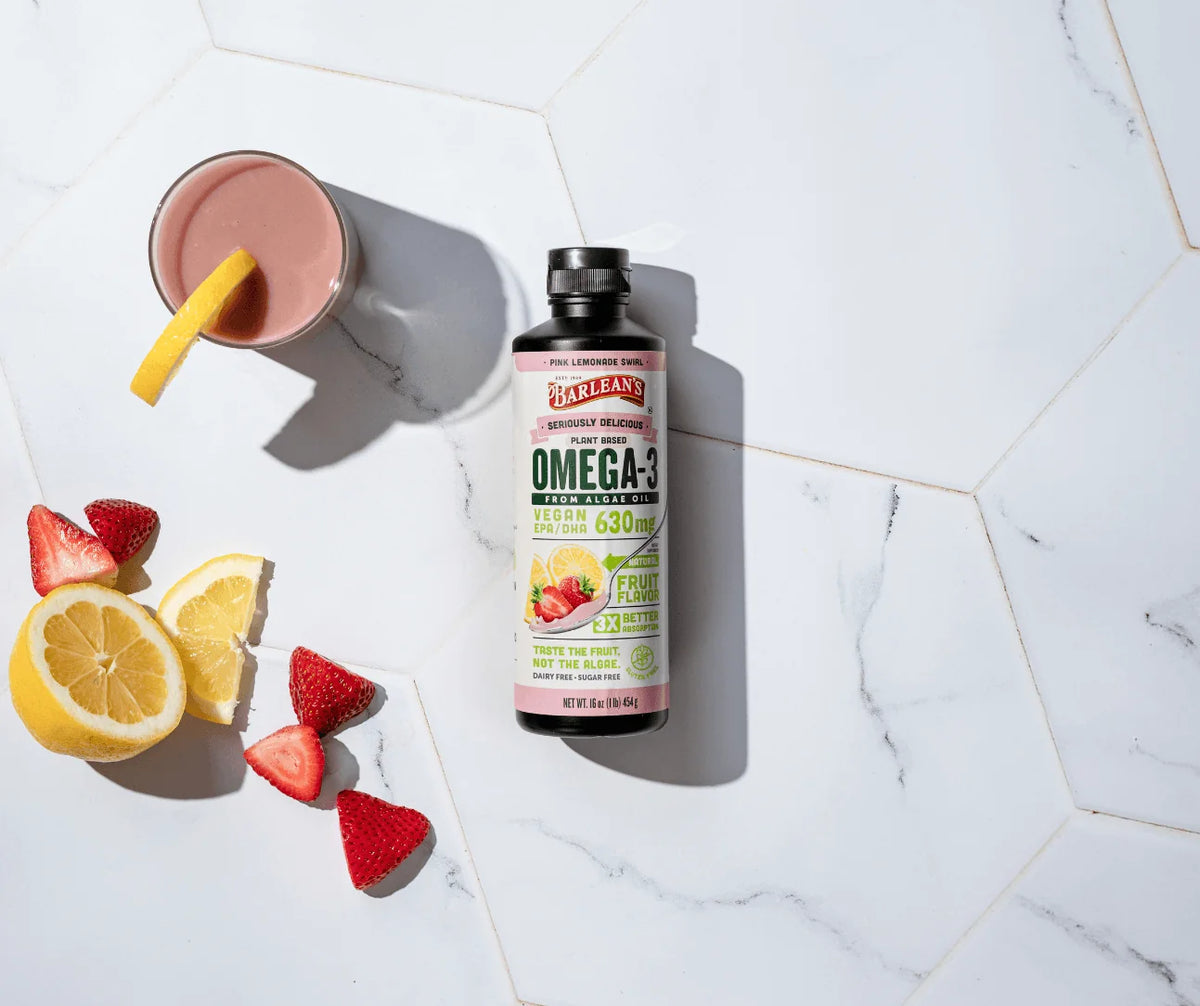
- The products: Pink Lemonade, Ginger Peach, and Liquid Vegan Omega-3
- Who algae oil is perfect for
- Common questions you'll hear
Why Algae Oil
For years, vegans and vegetarians had a real problem with omega-3s. Flax oil provides ALA, which is a plant-based omega-3, but your body has to convert ALA into EPA and DHA. That conversion rate is only about 5 to possibly 15%. So even if you're taking flax oil every day, you're probably not getting enough EPA and DHA for targeted support.
And obviously, fish oil isn't an option for plant-based diets.
Algae oil solves this completely because it provides direct, preformed EPA and DHA from a plant source. The same omega-3s you'd get from fish oil, but entirely vegan.
Fish don't actually produce EPA and DHA themselves — they accumulate it from eating algae. So we're just skipping the fish and going straight to the source.
Barlean's algae oil delivers 630 mg of vegan EPA plus DHA per serving. It's perfect for vegans, vegetarians, and anyone who's sensitive to fish.
Why Barlean's Algae Oil Specifically
This is important, because not all algae oils are created equal.
Here's something most people don't know about algae oil extraction: when you rupture the algae membrane to extract the oil, it immediately starts to oxidize. Without careful handling, you end up with dark, unpleasant-smelling oil that's lower quality.
Some companies cut corners by using chemical solvents like hexane to speed up extraction because it's faster and cheaper. But you end up with chemical residues in your supplement.
Barlean's uses certified chemical solvent-free extraction. This process involves delicate handling that prevents oxidation. The result is light, fresh, high-quality oil with no chemical residues.
What this means for customers:
- Clean, pure omega-3s with no chemical residues
- Fresh taste that's never dark or unpleasant
- High quality that's safe for the whole family
We never compromise on quality, and that's what sets Barlean's apart.
Why Algae Oil Matters for Overall Wellness
Cardiovascular Health — EPA and DHA support a healthy heart and cardiovascular system.
Cognitive Function — DHA is the primary omega-3 in brain tissue. It supports mental clarity, focus, and healthy mood balance.
Overall Wellness — Supports a healthy inflammatory response, promotes joint flexibility, and supports eye health since the retina contains high amounts of DHA.
The Vegan Advantage:
- Preformed EPA and DHA — same as fish oil but plant-based
- No conversion required — ready to use immediately
- 420 mg of DHA plus 210 mg of EPA per tablespoon
- Up to three times better absorption than standard algae oil liquid or soft gels because of our emulsification process
Pink Lemonade
Our most popular algae oil flavor.
Flavor: Delicious pink lemonade — sweet, tart, and refreshing, like cold lemonade on a summer day.
Nutrition: 630 mg of vegan EPA plus DHA per tablespoon (420 mg DHA, 210 mg EPA) — all preformed omega-3s ready to use immediately.
Why people love it:
- Tastes exactly like pink lemonade — many say it tastes like a Starburst, but without the sugar
- Refreshing, not heavy or oily
- Kids actually ask for it — that sweet-tart balance is perfect
- Zero algae taste whatsoever
- Sugar-free, ideal for keto and diabetic diets
Serving: 1 tablespoon daily for ages 4 and up.
Ginger Peach
For those with more sophisticated taste buds.
Flavor: Sweet, peachy with warm ginger — tropical meets spice with more complexity than a typical fruit flavor.
Nutrition: Same strength — 630 mg of vegan EPA plus DHA per tablespoon (420 mg DHA, 210 mg EPA) — all preformed and ready to use.
Why people love it:
- The unique ginger warmth adds depth
- Sweet peachy flavor balances the spice perfectly
- Creamy, dessert-like texture
- More sophisticated than typical fruit flavors
Serving: 1 tablespoon daily for ages 4 and up.
Liquid Vegan Omega-3
The best of both worlds — combining flax and algae in one formula.
Nutrition: Complete omega-3 profile with 7,200 mg of ALA from organic flax PLUS 630 mg of preformed EPA and DHA. Total omega-3 power in one formula.
Why this matters: Preformed DHA from algae oil combined with ALA omega-3s from flax oil make for a very effective way to support cardiovascular health, cognitive function, and overall well-being.
Format: Unflavored — mix into smoothies, yogurt, oatmeal, or protein shakes. Pour directly over salad or make delicious salad dressing with vinegar and spices.
Perfect for: People who want complete plant-based omega-3 coverage without taking multiple products.
Serving: 1 tablespoon daily for ages 4 and up.
Who Needs Plant-Based EPA and DHA?
Vegans and Vegetarians — The obvious fit. Algae oil is the only direct source of preformed EPA and DHA without fish. No conversion needed, ready to use, provides complete omega-3 nutrition for any plant-based diet. Family-friendly for ages 4 and up.
Fish-Sensitive Individuals:
- People allergic to fish or seafood
- People who don't like the taste or smell
- People concerned about ocean contaminants
- Anyone who wants clean omega-3s
Environmentally Conscious People:
- Over 60% of omega-3 users prefer plant-based options when given the choice
- Concerned about overfishing
- Want sustainable supplement choices
- Algae cultivation actually absorbs carbon as it grows while protecting ocean ecosystems
Quality-Conscious People:
- Want chemical solvent-free supplements
- Seeking the highest quality preformed EPA and DHA
- Value purity and freshness
Comparing the Three Omega-3 Options
Flax Oil:
- Provides plant-based ALA
- Your body converts 5-10% (sometimes up to 15%) to EPA and DHA
- Perfect for baseline omega-3 support, vegans, and general wellness
Algae Oil:
- Provides direct EPA and DHA from plants
- No conversion needed — ready to use immediately
- Certified chemical solvent-free
- Perfect for vegans needing targeted support and fish-sensitive individuals
Fish Oil:
- Provides direct EPA and DHA from fish
- Highest potency options available
- Perfect for non-vegans wanting maximum strength
Different options for different people. Knowing which one to recommend comes down to understanding what matters most to the person you're talking to.
Common Questions and How to Answer Them
"Fish oil is better than algae oil." Your response: They actually provide the same preformed EPA and DHA because fish get their omega-3s from eating algae. We're going straight to the source. Same nutrients, plant-based, more sustainable, and certified chemical solvent-free. Plus, emulsification means up to three times better absorption. That said, if someone needs higher amounts of EPA and DHA, fish oil offers higher potency options. But for vegans, vegetarians, fish-sensitive people, or environmentally conscious customers, algae is the way to go.
"Flax oil is the vegan omega-3." Your response: True, but flax provides ALA, and your body only converts 5-10% (maybe up to 15%) to EPA and DHA. Algae oil gives you direct preformed EPA and DHA with no conversion needed. Many people use both for complete wellness — that's exactly why we created the Liquid Vegan Omega-3 that combines them.
"What about chemical solvents in algae oil?" Your response: Some companies use chemical solvents like hexane to extract algae oil faster and cheaper. Barlean's is certified chemical solvent-free. We use a delicate extraction process that preserves purity and quality. You're getting the cleanest algae oil available.
"Do kids really like the taste?" Your response: Absolutely. Pink Lemonade is especially popular with kids — parents tell us their children actually ask for it. It has that smoothie-like texture and dessert-like flavor. Many say it tastes like a Starburst. It makes omega-3s a treat instead of a chore.
"Why does algae oil cost more than flax?" Your response: Algae oil provides direct preformed EPA and DHA, which requires specialized cultivation and careful, chemical solvent-free extraction. You're getting the same omega-3s as fish oil, but plant-based and sustainable. For vegans, it's the only direct source of preformed EPA and DHA available.
"Can I take algae oil with flax oil?" Your response: Absolutely. Many people combine them — flax provides ALA for cardiovascular and omega-3 support, while algae provides targeted preformed EPA and DHA. Our Liquid Vegan Omega-3 actually combines both in one formula for an all-in-one product.
"How do I store it?" Your response: Refrigerate after opening. Before opening, keep in a cool place and avoid high heat.
Key Takeaways
Three plant-based options:
- Pink Lemonade — Kid-friendly, refreshing
- Ginger Peach — Sophisticated, energizing flavor
- Liquid Vegan Omega-3 — Combines flax and algae for complete coverage
Key benefits:
- The only vegan source of direct preformed EPA and DHA
- 630 mg of EPA plus DHA per serving
- Up to 3 times better absorption than standard algae soft gels or liquid
- Zero ocean contaminants or heavy metals
What makes Barlean's different:
- Certified chemical solvent-free extraction
- Delicate handling that prevents oxidation
- Fresh, light, high-quality oil
- The highest quality algae oil with preformed EPA and DHA
Sustainability: Algae cultivation is environmentally friendly, carbon-absorbing, protects ocean ecosystems from overfishing, and requires minimal resources — just salt, sun, and water.
Coming Up Next: Training 9 will cover Omega Pals — our kids' line that gets children excited about omega-3s.
Share:
Module 19: Mood Drops Collection
Module 10: Eye Remedy